The Legacy of Joseph Pilates: The Pioneer Behind a Global Fitness Phenomenon
July 23, 2024, 7:11 p.m.
When you hear the word "Pilates," it conjures images of lean, toned bodies performing controlled movements on mats or sophisticated equipment. But have you ever wondered about the origins of this now-global fitness phenomenon? The story begins with a visionary named Joseph Pilates, whose innovative approach to exercise and wellness has left an indelible mark on the world.
Early Life and Influences
Joseph Hubertus Pilates was born on December 9, 1883, in Mönchengladbach, Germany. As a child, he suffered from various ailments, including asthma, rickets, and rheumatic fever, which left him determined to improve his physical health. Inspired by his father, a gymnast, and his mother, a naturopath, Joseph immersed himself in studying different forms of exercise, including gymnastics, bodybuilding, yoga, and martial arts. This eclectic mix of influences would later form the foundation of his unique fitness system.
The Birth of Contrology
In his early twenties, Joseph moved to England, where he worked as a boxer, circus performer, and self-defense instructor. During World War I, he was interned as an "enemy alien" along with other German nationals. It was in the internment camps that Joseph began to develop his exercise system, which he initially called "Contrology." He devised a series of mat exercises to help fellow internees maintain their physical health and even experimented with creating makeshift exercise equipment from bed springs and other available materials.
Pilates' Journey to America
After the war, Joseph returned to Germany, where his methods gained some recognition. However, disillusioned with the political climate, he emigrated to the United States in 1926. It was on this voyage that he met his future wife, Clara, a nurse who would become his lifelong partner in promoting the Pilates method. Together, they opened the first Pilates studio in New York City. The studio quickly attracted dancers, athletes, and others seeking rehabilitation and fitness training.
Principles and Philosophy
Joseph Pilates' method was grounded in a holistic understanding of the body and mind. He believed in the importance of breath, concentration, control, precision, centering, and flow—all principles that are integral to Pilates practice today. His exercises were designed to strengthen the "powerhouse" or core muscles, which he believed were crucial for overall stability and health.
The Equipment Innovator
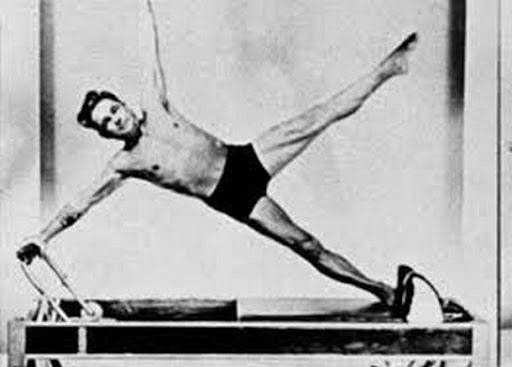
Beyond the mat exercises, Joseph was a prolific inventor. He designed numerous pieces of equipment to aid in performing his exercises, the most famous of which are the Reformer, the Cadillac, the Wunda Chair, and the Spine Corrector. These apparatuses, still in use today, are integral to the Pilates method, allowing for a wide range of movements and levels of resistance.
Enduring Legacy
Joseph Pilates passed away in 1967 at the age of 83, but his legacy continues to thrive. The Pilates method has evolved and expanded, now practiced by millions worldwide in various forms, from traditional mat classes to contemporary adaptations using advanced equipment. His original studio, now a historic landmark, remains a testament to his enduring influence.
The Modern Pilates Movement
Today, Pilates is recognized not only as a fitness regime but also as a valuable tool in physical therapy and rehabilitation. Its benefits are well-documented, including improved posture, flexibility, strength, and overall well-being. Many of Joseph Pilates' original students, often referred to as the "Pilates Elders," continued to teach and propagate his methods, ensuring that his teachings were preserved and passed on to new generations.
Conclusion
Joseph Pilates was more than just a fitness instructor; he was a visionary who understood the profound connection between the mind and body. His innovative exercises and equipment have stood the test of time, proving the efficacy and versatility of his methods. As we continue to practice and evolve Pilates, we honor the legacy of a man who dedicated his life to helping others achieve optimal health and wellness.
Whether you're a seasoned practitioner or a curious beginner, knowing the origins of Pilates adds a deeper appreciation for the discipline and the remarkable man behind it. So next time you roll out your mat or adjust the Reformer, remember Joseph Pilates and his extraordinary journey to transform the way we move and live.